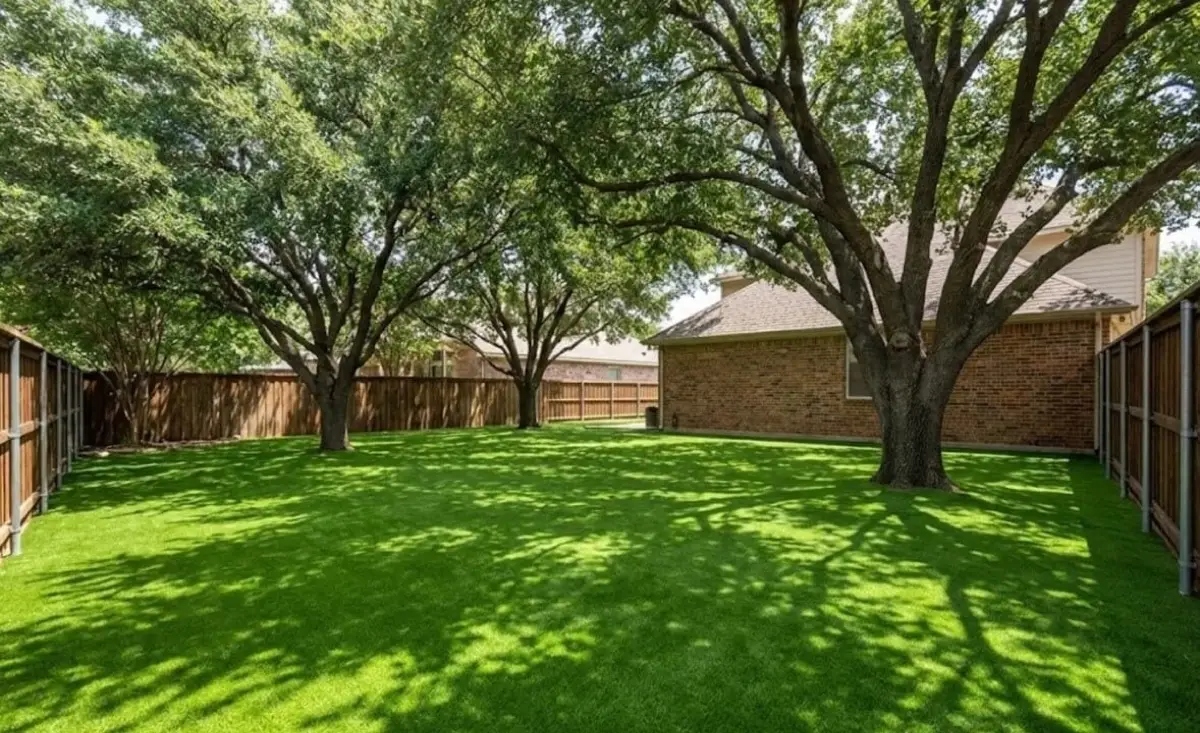
To find out how much sod you need, measure each section of your lawn in square feet (length times width), add the sections together, then add 5 to 10 percent for cuts and odd angles. Sod is sold by the piece or by the pallet, and one pallet covers roughly 450 square feet. Here is how to measure accurately so you do not come up short on install day or pay for grass you do not use.
Step 1: Break the yard into rectangles
Few yards are one clean shape, so split yours into simple rectangles and squares. The front yard, back yard, and the strip along the driveway might each be their own rectangle. Sketch it on paper if that helps.
For curved or triangular areas, measure the longest length and width and treat it as a rectangle. A little overage there is fine. You want to round up, not down.
Step 2: Multiply and add
Measure the length and width of each rectangle in feet, multiply them to get square feet, then add all the sections together.
For example:
- Front yard: 40 ft x 25 ft = 1,000 sq ft
- Back yard: 50 ft x 30 ft = 1,500 sq ft
- Side strip: 30 ft x 6 ft = 180 sq ft
- Total: 2,680 sq ft
Step 3: Add 5 to 10 percent for waste
Sod gets cut to fit curves, beds, and corners, and those cuts create scrap. Add about 5 percent for a simple rectangular yard and closer to 10 percent for a yard with lots of beds, trees, and curves.
Using the example above, 2,680 sq ft plus 10 percent is about 2,950 sq ft of sod to order.
Pallets, pieces, and what they cover
Sod is usually sold two ways in DFW:
- By the piece (slab): A common Bermuda piece is about 16 in x 24 in, covering roughly 2.67 square feet.
- By the pallet: A pallet typically covers about 450 square feet, though this varies a little by farm and grass type.
For the 2,950 sq ft example, that is about 7 pallets.
Do not forget what you are removing
If you are replacing an existing lawn, the square footage you measure is also the square footage of old grass that has to be removed and hauled away. That is part of the job and part of the cost. The same is true of grading and soil prep, which matter more than the sod itself. See preparing North Texas clay soil for sod.
Why we measure it for you anyway
A rough number is great for planning and for understanding a quote. But on install day, an exact measurement matters, because ordering one pallet too few means a second delivery fee and a seam where the colors do not quite match. When we estimate a yard, we measure it precisely and order accordingly, so you are not left short.
For what all of this costs, see how much sod installation costs in DFW.