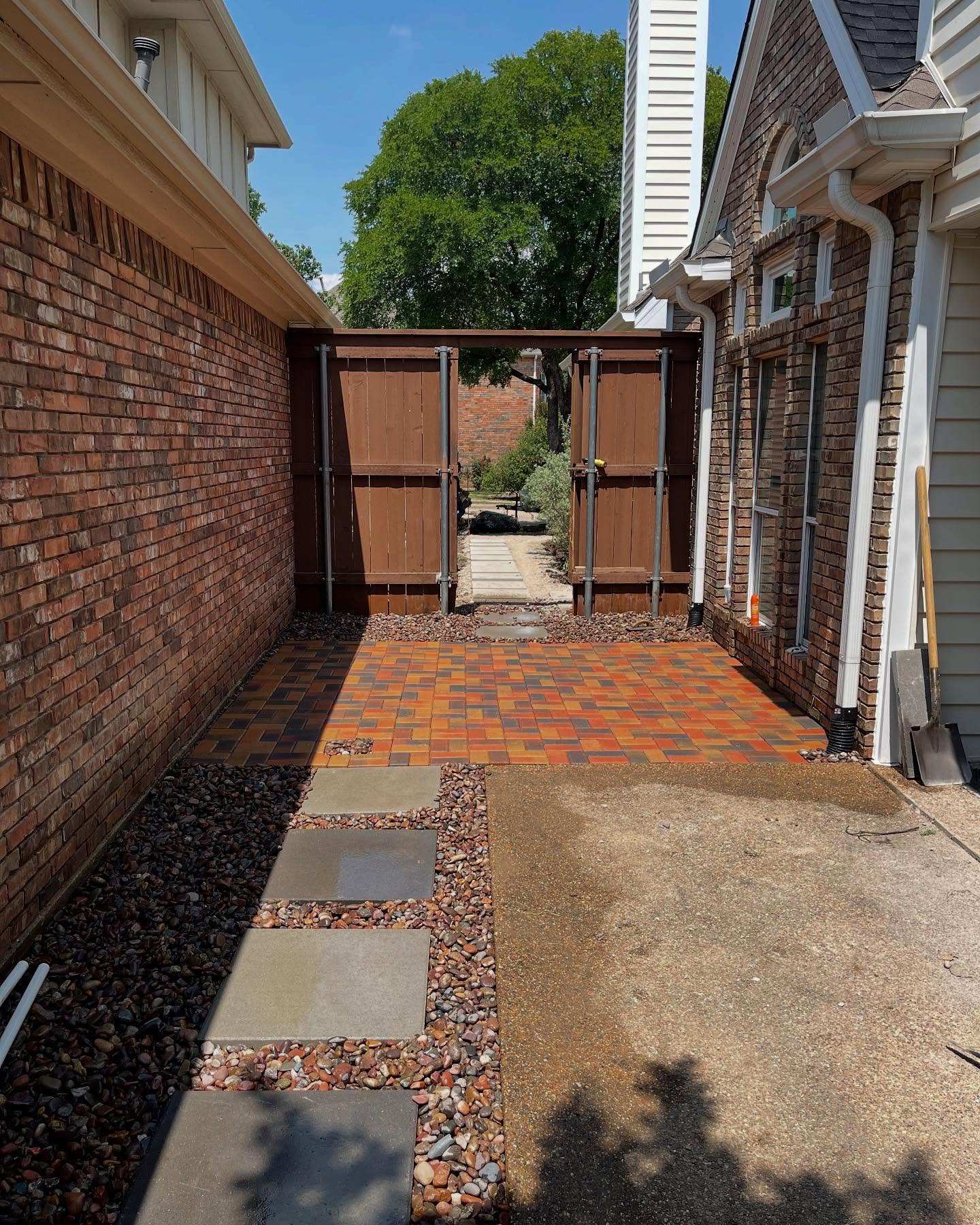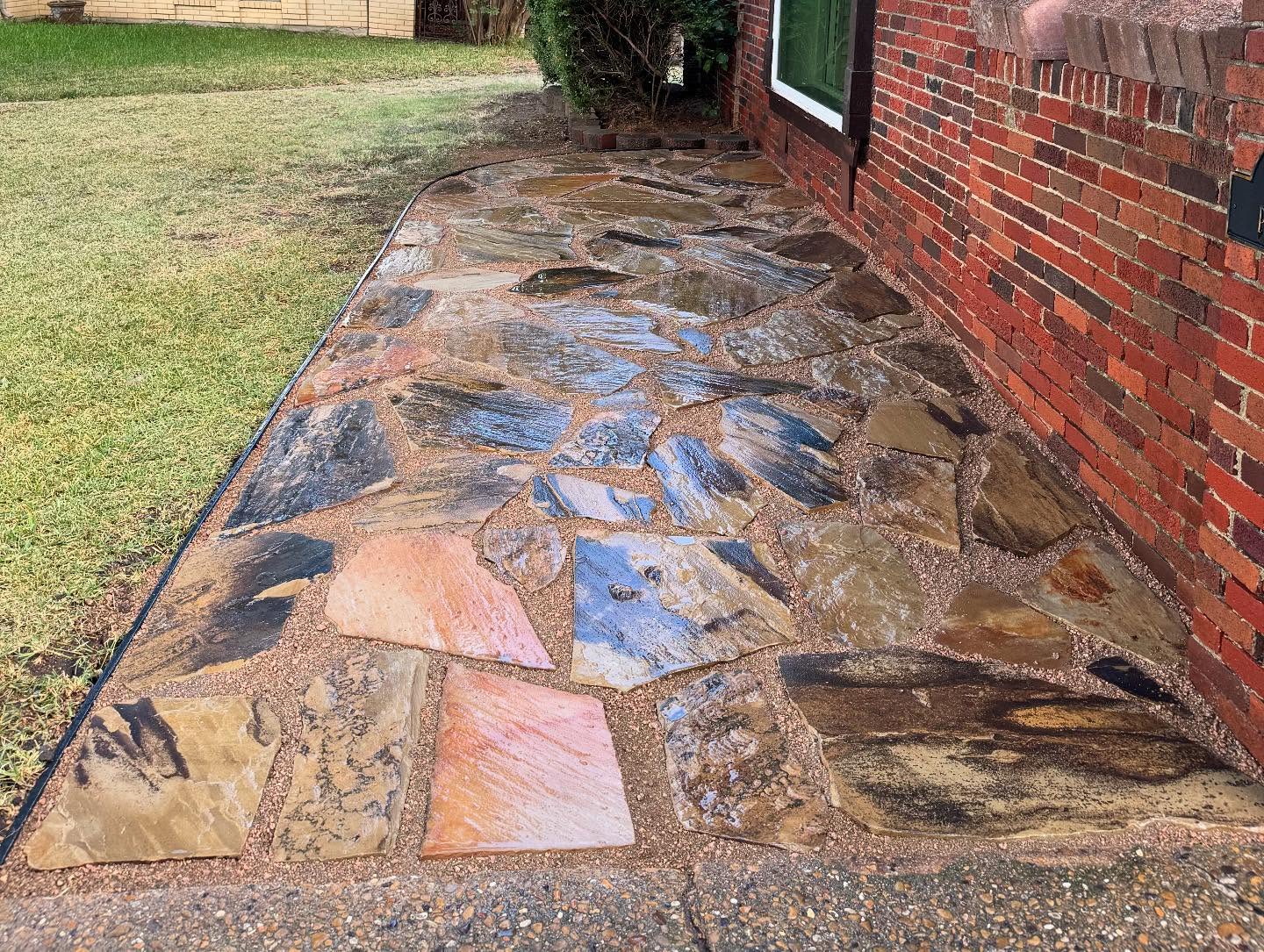
You likely need a retaining wall if your yard slopes enough to erode soil, pool water against the house, or leave space you cannot really use. A wall holds back that soil, stops the erosion, and turns a slope into flat, usable ground. On North Texas clay, the drainage built behind the wall matters just as much as the wall itself. Here is how to know if you need one and what a good one requires.
Signs you need a retaining wall
- Soil washing onto your patio, driveway, or into beds after every storm.
- A slope steep enough that grass will not hold and you are losing ground.
- Water running toward the house instead of away from it.
- Wasted space on a hill you would rather have flat for a patio, play area, or garden.
If none of these apply, you may not need a wall at all. We will tell you when a regrade or a simple drainage fix solves it for less.
Why clay makes walls tricky
Our expansive clay swells when wet and shrinks when dry, and it holds water against anything in its path. A wall built without the right foundation and drainage will lean, crack, or bow as that pressure builds. The dirt is not the enemy; trapped water behind the wall is.
What a wall that lasts actually needs
- A proper footing or base course set below grade and level.
- Gravel backfill and a drain behind the wall so water escapes instead of pushing.
- The right block or stone rated for the wall height.
- Engineering for tall walls. Walls over about four feet often need an engineered design and may require a permit, depending on your city.
Skipping the drainage is the single most common reason DFW retaining walls fail.
Walls do double duty
Beyond holding soil, low retaining walls and seating walls define patios and outdoor rooms. Many of our hardscape projects use a wall to both fix a slope and create a finished edge for a patio. See how it fits a full build in the complete guide to hardscaping in DFW.
Dealing with standing water more than a slope? Start with how to fix a muddy side yard in North Texas.