Hardscaping is the built, hard part of your yard: patios, walkways, retaining walls, fire features, and drainage. In DFW, a good hardscape job lives or dies on two things, the base prepared under it and how it handles our expansive clay soil. Get those right and a patio lasts for decades. Get them wrong and you see cracking, settling, and pooling water within a couple of seasons. This guide covers every major decision in order, and links to a deeper article on each.
It is written for homeowners across Carrollton, Plano, Frisco, Dallas, Lewisville, Coppell, Addison, Southlake, and the Park Cities planning a patio, walkway, wall, or full backyard build.
Step 1: Choose the material
The first real decision is what your patio or walkway is made of, because it drives both the look and the price.
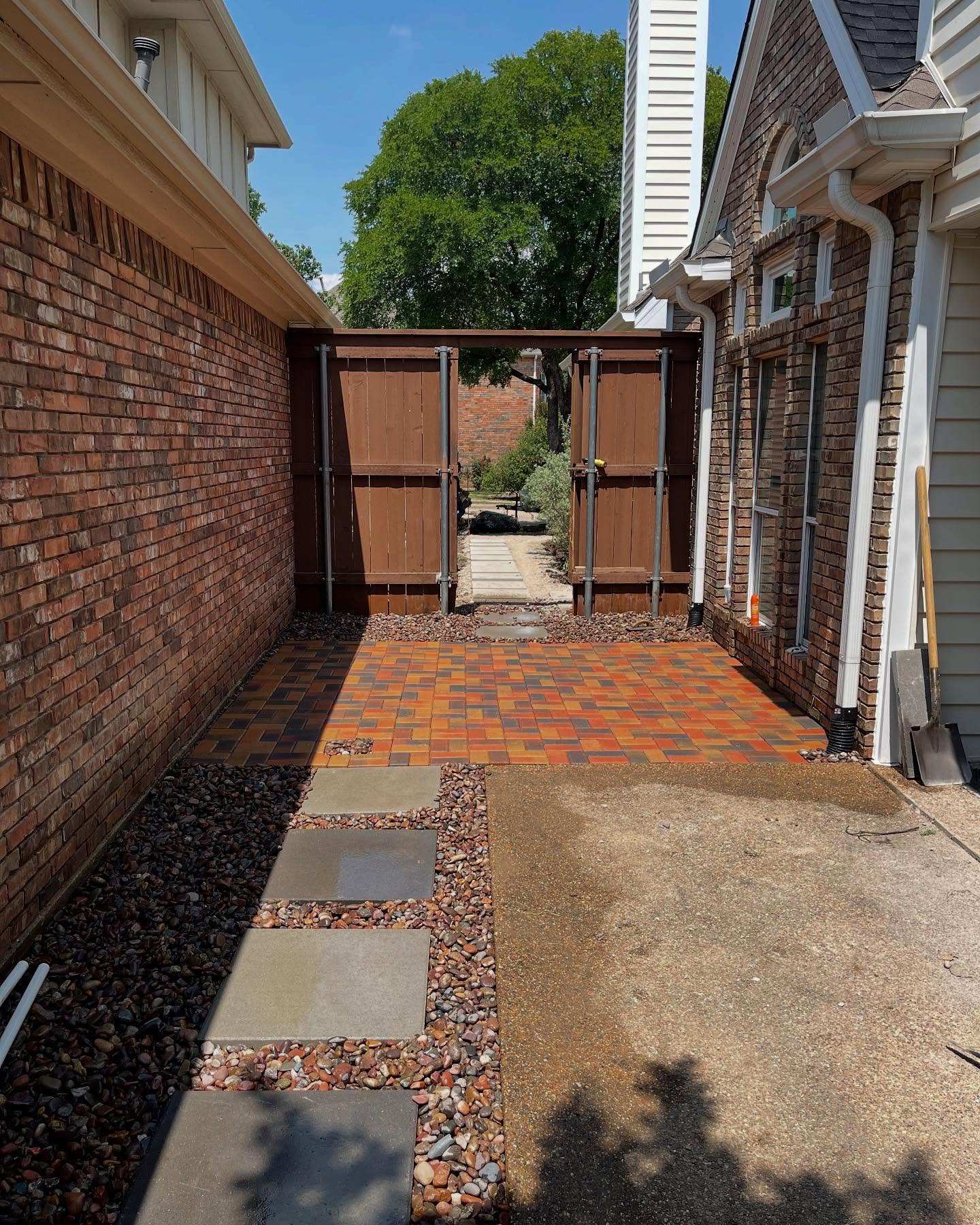
- Pavers are individual units set on a compacted base. They flex with our clay instead of cracking, and a single damaged piece can be lifted and replaced.
- Poured concrete is the lowest cost per square foot, but on expansive clay it is the most likely to crack over time.
- Stamped concrete gives a stone look at a middle price, though it cracks like regular concrete and is harder to repair without showing it.
We break the choice down in pavers vs concrete vs stamped concrete in DFW, and which surfaces hold up to our sun in the best patio material for Texas heat.
Step 2: Know what it costs
A paver patio in DFW commonly runs from a few thousand dollars for a small slab to well over $20,000 for a large patio with seating walls and features. Material, square footage, site access, and how much grading is needed all move the number. The full breakdown is in how much a paver patio costs in DFW, with the wider view in our DFW landscaping cost guide.
Step 3: The base is 80 percent of the job
Whatever the surface, the base under it is what holds or fails. On Houston Black clay, that means excavating to the right depth, building a compacted gravel base, and planning drainage in from the start. The cheapest bids almost always cut the base thin, which is exactly why those patios move. See what a real build involves in what a backyard hardscape project looks like in DFW.
Step 4: Plan for water
DFW clay does not drain well. Hardscape that ignores water ends up with a muddy yard, a pooling patio, or a wall that bows. Good design moves water away from the house and away from the patio before a single stone goes down. If you already have a wet spot, start with how to fix a muddy side yard in North Texas.
Step 5: Retaining walls
If your yard slopes, a retaining wall does real structural work: holding back soil, preventing erosion, and creating usable flat space. On our clay, walls need proper footing, backfill, and drainage behind them, or they lean. Learn when you need one and how they are built in retaining walls for North Texas clay.
Step 6: Outdoor living
Once the hard surfaces are in, the features make the space. Fire pits, pergolas, seating walls, and outdoor kitchens turn a patio into a room you actually use. We cover what works in our climate and how to budget for it in outdoor living: fire pits, pergolas, and kitchens in DFW.
Step 7: Do not forget the front
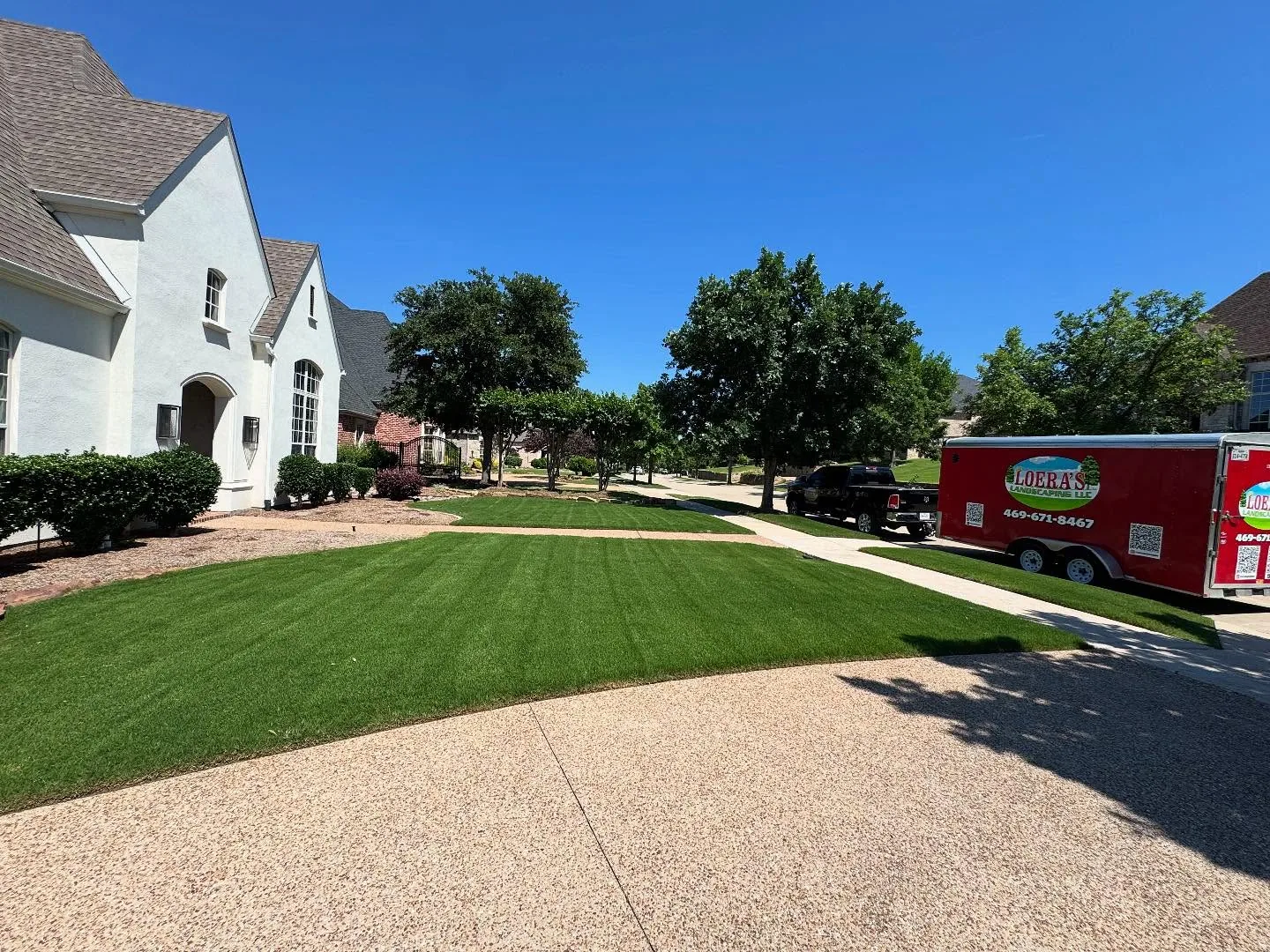
Hardscape is not just the backyard. A clean walkway, a defined entry, and crisp bed edging are some of the fastest ways to lift a home's curb appeal. See the quick wins in the fastest way to boost front-yard curb appeal in DFW.
Ready to get started
Omar Loera founded Loera's Landscaping in 2010 and has built patios, walkways, and walls across North Texas. We serve Carrollton, Plano, Frisco, Dallas, Lewisville, Coppell, Addison, Southlake, Highland Park, University Park, and Farmers Branch.