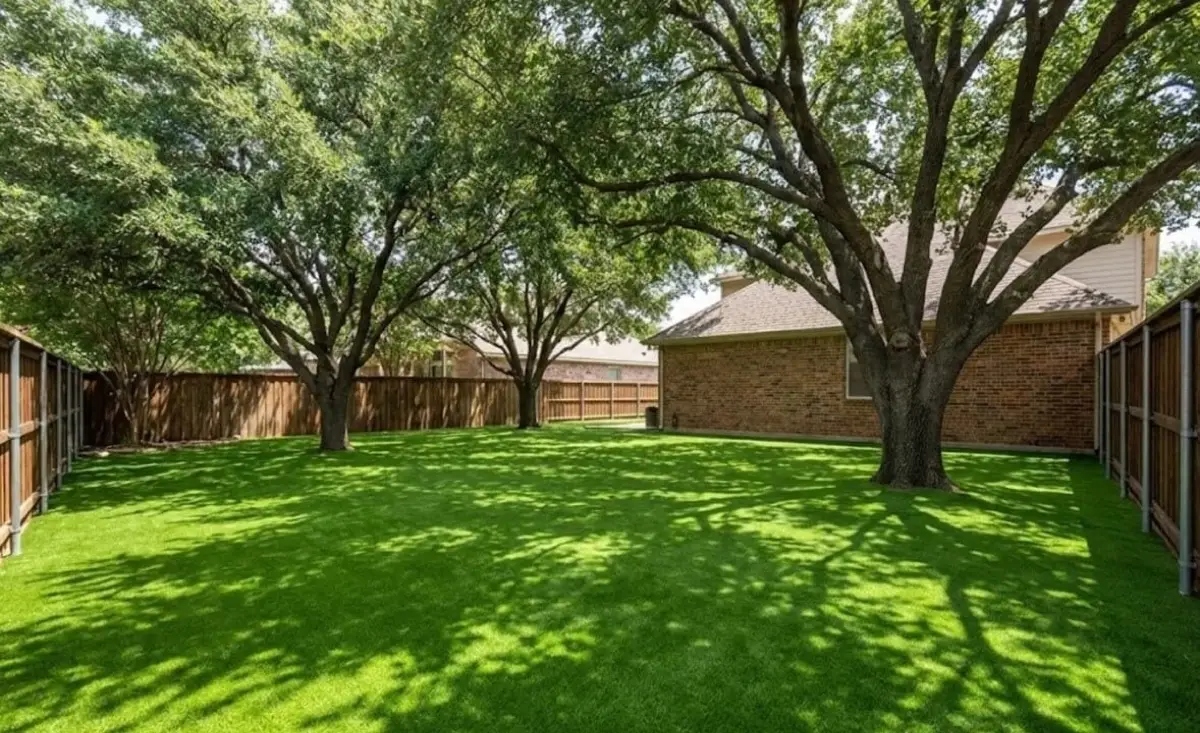
Artificial turf is one of the best things you can do for a dog yard in DFW, as long as it is installed as real pet turf and not generic landscape turf. Done right, it ends the mud, the dead urine spots, and the holes, and it rinses clean. Done cheap, it traps odor and drains poorly. The difference is entirely in the backing, the drainage, and the infill. Here is what to look for.
Why dogs and real grass fight in DFW
Between our clay (which turns to mud), the heat (which browns the lawn), and dog traffic and urine (which kills patches), keeping a real lawn alive in a dog yard is a losing battle for many DFW homeowners. Turf removes that fight.
What makes turf actually "pet turf"
- A fully permeable, flow-through backing so urine and water drain straight through instead of pooling.
- A proper drainage base underneath (compacted aggregate, sometimes a dedicated pet drainage layer) so the whole system rinses clear.
- Antimicrobial infill that resists odor-causing bacteria. This is the piece cheap installs skip, and it is why some turf yards smell.
- Durable, resilient blades that bounce back from running and digging.
Keeping it clean
Pet turf is low-maintenance, not maintenance-free. Solid waste gets picked up like normal; urine rinses through with a quick hose-down (more often in summer). An occasional enzyme rinse keeps it fresh. That is the whole routine, and it beats reseeding dead patches every season.
Is it safe and comfortable?
Quality pet turf is non-toxic and lead-free, and with a lighter color plus the cool-down tips in does artificial turf get too hot in Texas, it stays comfortable for paws. Most dogs take to it within a day.
Bottom line
For DFW dog owners tired of mud and dead spots, pet turf is the most worry-free yard there is, provided it is built for pets from the base up. See the full build in the complete guide to synthetic turf in DFW.