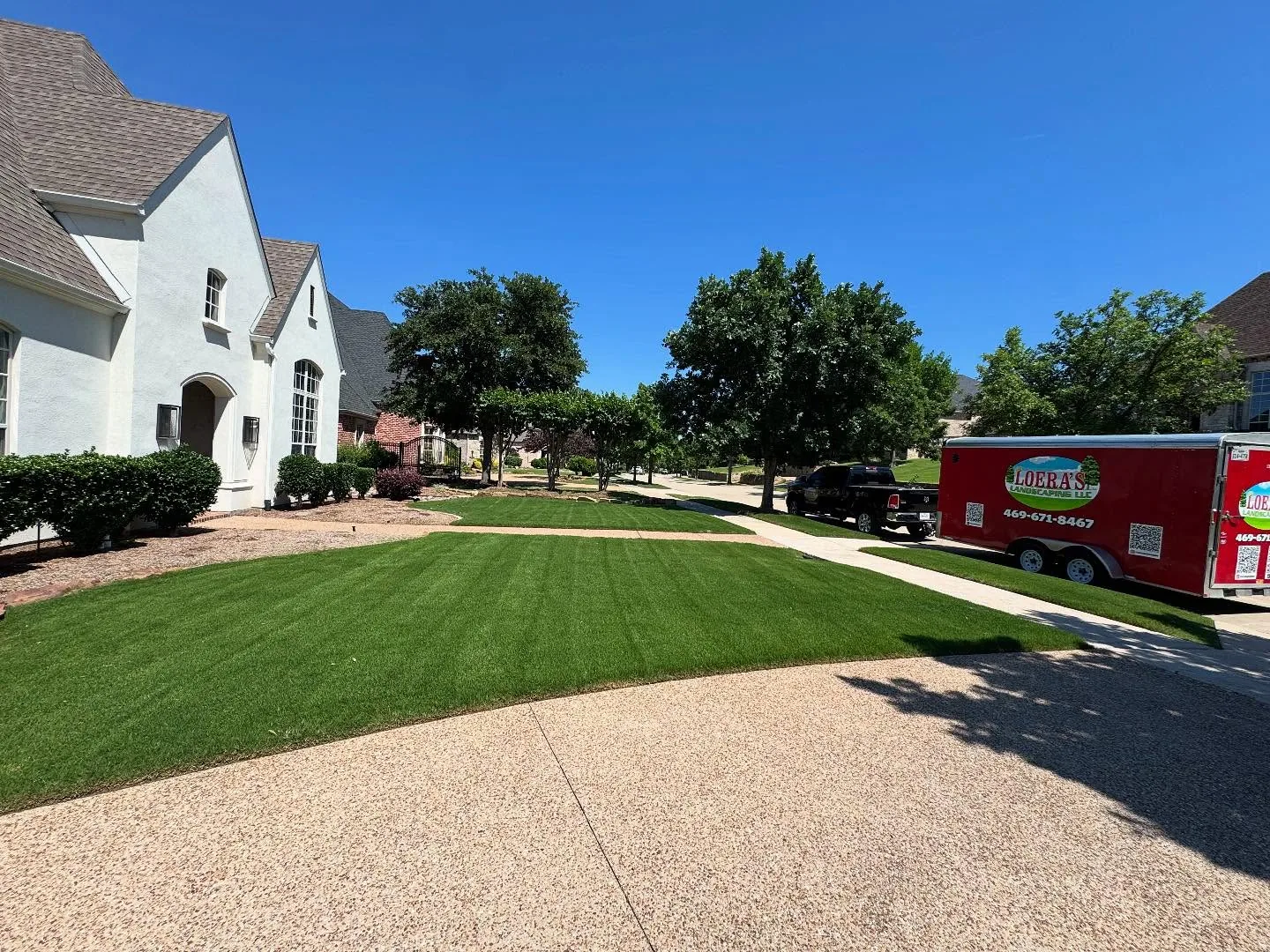
The secret to a weed-free, healthy North Texas lawn is timing, not stronger chemicals. Apply pre-emergent in early spring before crabgrass germinates and again in early fall, spot-treat broadleaf weeds as they appear, watch for grubs in mid to late summer, and fertilize with the season rather than against it. Here is the month-by-month calendar for DFW.
Late winter to early spring (Feb to March)
- Pre-emergent, round one. Apply before soil temperatures hit about 55°F, which is when crabgrass germinates. This is the single most important weed step of the year. Miss it and you fight crabgrass all summer.
- Hold off on heavy fertilizer until the grass greens up.
Spring (April to May)
- First fertilizer at about 50 percent green-up, with a slow-release product. See when to fertilize your lawn in North Texas.
- Spot-treat broadleaf weeds (clover, dandelion, henbit) as they show.
Summer (June to August)
- Watch for grubs. Brown patches that pull up like loose carpet, plus more birds digging, point to grubs. Treat if you confirm them.
- Light, careful feeding only. Heavy nitrogen in peak heat stresses the lawn. Focus on mowing height and watering.
- Watch for brown patch and other fungus in humid spells (see why your lawn turns brown in June).
Early fall (September to October)
- Pre-emergent, round two. This one stops winter weeds like poa annua and henbit. Most homeowners skip it and pay for it in spring.
- Fall fertilizer to build root reserves before dormancy.
Late fall to winter (November to January)
- Bermuda and Zoysia go dormant and brown; that is normal, not dead.
- Keep leaves cleared so the crown can breathe.
Make it simple
Two pre-emergent applications (early spring, early fall), seasonal fertilizer, and spot weed control cover most of it. For how this fits the whole routine, see the complete guide to lawn care in North Texas, or hand the timing off with our lawn fertilization program.